EV Charging Safety Tips Every Owner Should Know | Glida India

India’s EV revolution is advancing rapidly as homes and roadways across the country accept EVs’ gentle hum. Each new charging cable represents development, sustainability, and technological advancement.  While this technological wonder is impressive, safety is still the key to efficiency. Electric vehicle charging requires the same accuracy as machine maintenance.

Performance and personal security may be compromised by one missed safeguard. Responsible charging becomes more important as home charging systems rise. Even if electricity is invisible, owners must realize its strength and risks. Safe charging provides vehicle durability, equipment dependability, and user trust. Every EV owner must know these safety steps to charge wisely, safely, and sustainably in India’s fast-changing electric environment.

Understanding the EV Charging Safety

EV charging systems, including an EV Car home charger, require accurate connection, voltage management, and current flow. Every charge starts with a calculated energy transfer from the grid to the battery with regulated intensity. Precision-crafted charger connections provide power source-vehicle system integration. Avoiding surges and maintaining electrical stability throughout the cycle requires proper grounding.

Any installation using inferior materials or violating certification criteria increases dangers. Under stress, low-quality equipment might overheat, shock, or short-circuit. Certified installations by the top electric car charging station companies protect consumers from these unknown risks. Following manufacturer directions ensures each component meets safety standards. In this complex current-control symphony, discipline determines endurance. True safety comes from knowing the physics behind every quiet mile of an electric car.

Here We Go with the Most Prominent EV Charging Safety Tips

Always Use Certified Charging Equipment

Certified charging equipment ensures a safe and efficient start to all electric vehicle rides. The accuracy, durability, and variable load protection of BIS and IEC-certified chargers are extensively tested. Performance and electrical stability are ensured by certified cables. Safety, longevity, and the delicate balance between automotive technology and electrical infrastructure are improved by safe choices.

Ensure Professional Installation

Professional installation by the top electric car charging station companies underpins every safe and successful EV charging system. Only trained electricians can balance voltage, wire accuracy, and safety. Proper earthing protects users and essential components from stray currents. Circuit breakers and load management systems precisely and safely control electrical flow. Even basic DIY installations might hide flaws that cause overheating, tripping, or electrical fires. Damaged wiring might also degrade the system. It results in poor charger performance.

Stay Aware of the Charger Location

● Install in moisture-free zones

● Ensure proper air ventilation

● Avoid charging near water

● Prevent exposure during rainfall

● Use waterproof protective covers

● Keep the floor clean and dry

● Shield cables from damp surfaces

● Maintain a dust-free charging area

● Inspect the surroundings before plugging in

● Store equipment in a covered space.

Be Particular about Overcharging

Overcharging on an EV Car home charger quietly weakens electric vehicle batteries. Long-term charging heats cells, reducing efficiency and performance. Every charge must be adjusted to maintain battery pack chemical harmony. When capacity peaks, smart chargers and programmed timers stop the flow. These smart solutions decrease energy loss and thermal stress. Advanced charge control technologies manage voltage scientifically in the most recent EVs. Battery health needs monitoring to provide reliable power and performance with each charge.

Keep Checking the Cables and Connectors

● Inspect cables before every charge

● Check for cuts or cracks

● Replace damaged wires immediately

● Tighten loose plug connections

● Avoid sharp bends in cables

● Keep cords free from weight

● Store cables properly after use

● Clean connectors with a dry cloth

● Prevent twisting during coiling

● Use only original accessories.

Take care of Timely Updates

Modern EV chargers get accurate updates to improve performance and safety. Owners must routinely check the manufacturer’s app or the approved service portal alerts. The latest safety and technology criteria are met by installing certified firmware. Regular updates maintain charger integrity, enhance performance, and ensure safe, intelligent energy transmission with every connection.

Concluding Remarks

Owners who balance current and control know that safety boosts performance and durability. Professional electric car charger installation in India provides stability, while regularly updated chargers maintain their intelligence.

Regular checks prevent silent wear from becoming an expensive failure. True efficiency comes from controlled, knowledgeable operation, not speed. Certified gadgets, sophisticated monitoring, and regular vigilance characterize contemporary electric mobility. Safety will be India’s constant friend as it electrifies. Every attentive charge now protects tomorrow’s path to sustainable mobility, where technology, care, and conscience shine.
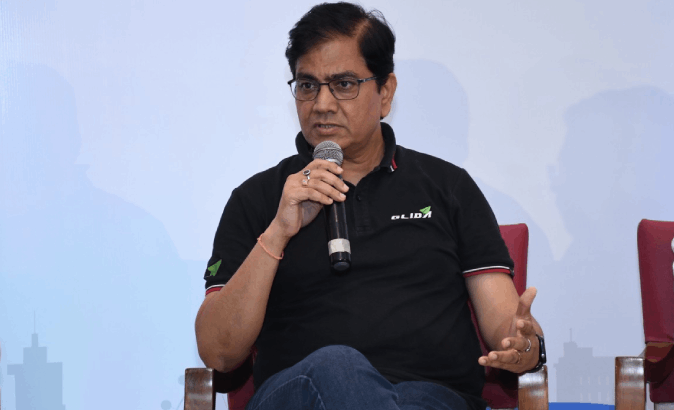
The Real Indian EV Story: Beyond Cars and Chargers

India’s electric vehicle (EV) transition is one of the most dynamic in the world, but it is also one of the most misunderstood. Narratives often equate “EV = car,” drawing parallels with Europe or OECD countries where passenger cars dominate the electrification story. This framing obscures India’s unique reality — one defined by four distinct mobility ecosystems: two-wheelers (2W), three-wheelers (3W), cars (4W), and buses/trucks. Each segment has its own economics, policy drivers, and adoption curve. If we continue to view the Indian EV journey through a car-centric lens, we risk missing both the successes already achieved and the challenges that truly need attention.

Segment-wise Reality Check

1. Two-wheelers (2W): Electric scooters and bikes have become the vanguard of India’s EV revolution. With demand subsidies under FAME-II and the newer PM e-DRIVE, sales have surged to more than 1.1 million units in FY 2024–25. Adoption is now around 5% of total 2W sales, and the segment is moving toward cost parity with ICE. Home charging and swappable batteries make public charging infrastructure less critical here.

2. Three-wheelers (3W): This is India’s quiet success story. More than 700,000 e-rickshaws and e-autos were sold in FY 2024–25, taking EV penetration beyond 50% of total 3W sales. Policy incentives, lower total cost of ownership (TCO), and financing models have made this segment self-sustaining.

3. Buses and Trucks: Electric buses, supported by FAME-II and state procurement programs, are scaling up across cities. Trucks are beginning to receive policy focus under PM e-Drive, recognizing freight electrification as essential for decarbonization. Here, depot charging and highway charging corridors are critical.

4. Cars (4W): The most striking story is in passenger cars. Unlike 2W and 3W, private electric cars have not received meaningful demand subsidies. Under FAME-II, only a small quota (~35,000 units) for fleet/commercial cars was supported, which has since been withdrawn. And yet, consumer adoption is rising sharply. By May 2025, EVs crossed 4% of passenger car sales, and in July/August 2025, that number exceeded 5%. This is happening without direct fiscal support, driven instead by consumer demand, improving model variety, and modest OEM push.

This makes the car story both a policy gap and a consumer-driven triumph.

The Charging Infrastructure Narrative

Another recurring distortion in media reporting is around charging infrastructure. It is often argued that “India doesn’t have enough chargers,” with EV growth compared unfavorably to “cars per charger” benchmarks in Europe or China.

By one estimate, India today has ~25,000 public charging points for ~300,000 compatible electric cars — a ratio of roughly 1:12. On paper, this looks healthy compared to global averages. But here’s the nuance:

• A charger-to-car ratio does not guarantee utilization for CPOs to track as a KPI.
• With cars coming equipped with larger batteries and faster charging capability, a smaller number of high-capacity chargers can serve many more vehicles effectively.
• The real metrics that matter are location, speed, uptime, and capacity utilization — not just raw numbers of charging points.

For 2W and 3W, which charge largely at home or depots, public charging is less relevant. For buses and trucks, strategic corridor planning matters more than urban density. For cars, destination and highway chargers matter, but adoption is already happening without waiting for a perfect charging map.

Why Segmenting the Narrative Matters

When we conflate all EVs into a single story — “India is lagging because chargers are too few” — we commit three errors:

1. We underplay successes: 2W and 3W adoption is world-leading.
2. We miss policy choices: The government consciously avoided subsidizing private cars to prevent optics of benefiting the affluent, yet car adoption is growing regardless.
3. We misdirect debates: Instead of asking how to design targeted support for private cars or high-capacity freight chargers, we end up in circular arguments about charger counts.

A segmented narrative forces us to ask sharper questions:

• How do we finance the next million e-2Ws and e-3Ws sustainably?
• What is the right mix of depot vs corridor charging for buses and trucks?
• Should India consider limited incentives for private EV cars to accelerate adoption while ensuring equity?
• How do we measure charging adequacy beyond raw ratios?

Conclusion: Towards a Smarter EV Story

India’s EV transition is not one story but four. Each segment has its own momentum, challenges, and infrastructure needs. Recognizing this is essential for policymakers, investors, OEMs, and consumers.

Most importantly, the car segment’s rise beyond 5% share without fiscal support should be celebrated as evidence of strong consumer demand and market maturity. This is happening in parallel with 2W/3W mass adoption, bus electrification, and early truck pilots.

If the narrative continues to frame the Indian EV journey through a “car-only” or “charger-count” lens, the risk is that policy and public opinion will be skewed. The better path is a nuanced, segmented, and data-driven conversation — one that captures the diversity of India’s mobility landscape.

Only then can we design the right programs, deploy the right infrastructure, and communicate the right messages to consumers.

Authored by

Article by Awadhesh Kumar Jha, Executive Director – GLIDA.

To read GLIDA’s story, click here.

Mentions and industry contributors: Indian Charge Point Operators Association, Glida India

India’s EV Charging Story: From Footnote to Frontline

Before the Indian Charge Point Operators Association (ICPOA), there was a big gap. Automakers had their groups. Utilities had their forums. But those building and running EV chargers — the Charge Point Operators — had no voice.

Charging was just a footnote in India’s #electricvehicle journey. Policies were made, but often without hearing from those on the ground. This led to gaps in planning, execution, and trust.

That’s why we, the founding members, created #ICPOA — to give charging its rightful place at the center of India’s EV future.

Who We Are

Today, #ICPOA brings together India’s leading Charge Point Operators and partners — including Glida India, ChargeZone, Jio-bp, Zeon Charging, Magenta Mobility, and many others. Together, we operate the largest share of public charging for four-wheelers — electric cars, taxis, fleets, and buses.

Why Charging Matters

India has set bold goals for electrification. Four-wheelers are both our biggest challenge and our biggest opportunity. Car ownership is still growing, giving us the chance to leapfrog to cleaner mobility. Fleets and buses are already going electric — but they need reliable charging to succeed.

And here’s something new: Know Your Battery (KYB). The battery is now the heart of every EV. It affects safety, performance, and value. Just as we once learned about fuel efficiency, we must now help everyone understand their batteries — how to charge, care for, and get the most out of them.

Our Mission

#ICPOA stands for three things:

Building Consumer Confidence: Charging must be predictable and trustworthy. If a charger is shown as available, it should work. Every driver should know their battery as well as they once knew their fuel tank.

Shaping Progressive Policy: We work with government and regulators to ensure that policies are ambitious but also practical.

Fostering Collaboration: From automakers to utilities, we believe in working together. Roaming, interoperability, and data transparency are not optional — they are essential.

What We Ask of Stakeholders

Government & Regulators: Provide long-term policy clarity. Treat charging as a grid asset, not a luxury. Make approvals faster and encourage investment.

Automakers: Design vehicles with charging in mind. Let’s make charging simple and seamless for everyone.

Utilities: Prepare the grid for higher loads and smarter connections. Charging can stabilize the grid — if we plan ahead.

Consumers: Hold us accountable. Demand reliability and value. And embrace KYB — the better you know your battery, the better your EV journey.

Industry Partners: Let’s collaborate, not just compete. Together, we can scale EV adoption.

A Word to the Media

Your stories shape public trust. Highlighting success — not just challenges — builds confidence. Let’s tell India’s #EV story together.

The Road Ahead

By 2030, India will need over 1.3 million public chargers for four-wheelers. It’s an ambitious goal, but together, it’s possible. Our vision is simple:

• Wherever there’s a car, there must be a charger.
• Wherever there’s a charger, it must work.
• And wherever there’s a battery, the consumer must know it — KYB.

Let’s Make EV Adoption Irresistible

This is about more than infrastructure. It’s about confidence, convenience, and a cleaner future for India. As #ICPOA, we pledge to be the voice of the charging industry, the ally of policymakers, the partner of automakers, and above all, the trusted friend of every EV user.

Let’s make EV adoption not just inevitable — but irresistible.

About the Event

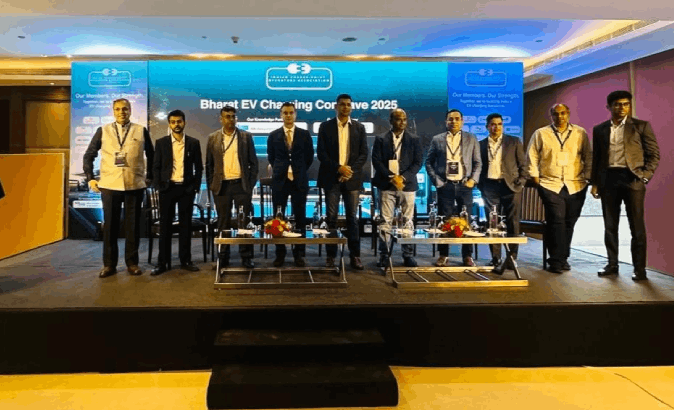
The above article features excerpts from the speech delivered by Mr. Awadhesh Kumar Jha, Chairman of the Indian Charge Point Operators Association, to distinguished guests and delegates at the inaugural ICPOA Bharat EV Charging Conclave 2025. This landmark event brought together charge point operators, OEMs, partners, media, and key stakeholders from the #EVindustry to accelerate the adoption of #electricmobility.

Notable attendees and contributors included Kartikey Hariyani, Sandeep Bangia, Krishna Sharma, Anshuman Divyanshu, Karthikeyan Palanisamy, Maxson Lewis, Dhairya Shah, Sukhvinder Singh, Krishna K. Jasti, Vikas Almadi, Wybren van der Vaart, Neeraj T, R.G. Venkataraman, Sudhendu J. Sinha, Preetesh Singh, EVreporter, Priyakshi Gupta, Exicom, Vrinda Nano Technologies (VNT), Plugzmart, Ravin Mirchandani, Kushagra Mittal, Anil Kaushik, Mahua Acharya, Chandresh Sethia, Arth Patel, and Akshay Galagali.

Powering India’s EV Revolution: GLIDA’s Vision for a Sustainable Future

Solving the Chicken-or-Egg Dilemma

Should EVs come first, or the charging infrastructure? While the debate continued, GLIDA took decisive action — building a robust charging network to fuel India’s electric mobility shift.

Recent research confirms: a reliable charging ecosystem drives EV adoption. At GLIDA, we’ve always believed in action over hesitation. Inspired by Shakespeare’s “To be or not to be” — for us, not to be was never an option.

A Journey of Resilience and Progress

From quiet months to policy breakthroughs, our commitment to electric mobility has remained unwavering. Today, public enthusiasm is growing, and industry collaboration is paving the way for mass EV adoption.

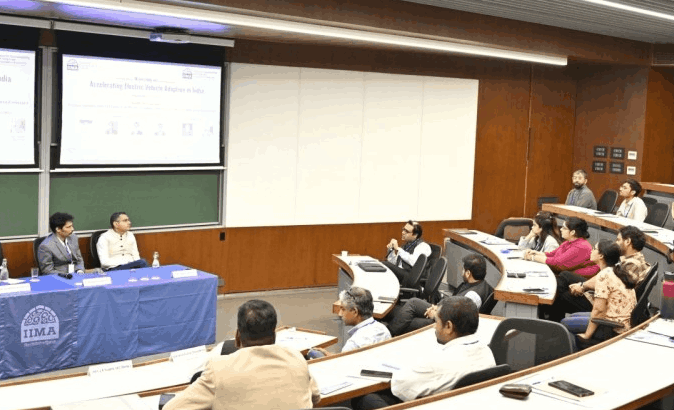
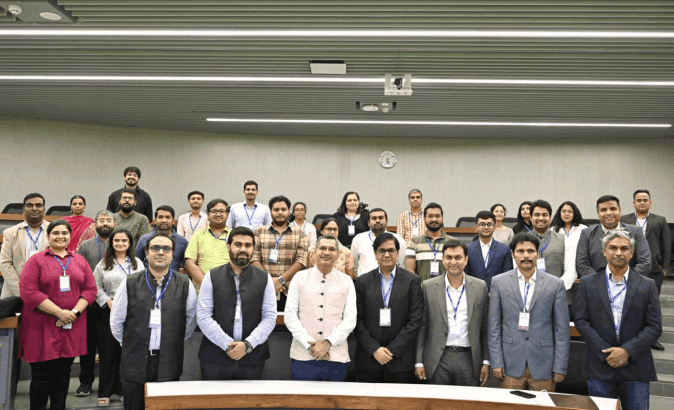
Insights from the IIMA Workshop on EV Adoption

Date: September 12, 2025
Venue: Indian Institute of Management Ahmedabad

Hosted by:
• Centre for Transportation and Logistics, IIMA (CTL)
• Centre for Sustainability and Corporate Governance Research (CSCG) at IIMA

Moderated by:
• Prof. Sandip Chakrabarti, Co-Chair of CTL
• Prof. Anish Sugathan, Chair of CSCG

blog-image

Key Highlights

Opening Address
Prof. Chakrabarti emphasized the need to view EV production, marketing, and adoption as an integrated ecosystem.

Vision for Transition
Prof. Sugathan expressed optimism about India’s inevitable shift to EVs through collaborative dialogue.

Keynote by Shri JP Gupta, IAS
Former Additional Chief Secretary (Finance), Government of Gujarat, highlighted the synergy between EVs and solar power for sustainable mobility.

Industry Perspectives

• Shri Anil Kumar Choudhary (Energy Efficiency Services Limited – EESL): Public-sector strategies for energy demand and EV transition
• Shri Suveer Sahdev (Uber India): Integrating EVs into ride-sharing fleets
• Dr. Ranga Srinivas Gunti (Tata Motors): Advancements in battery technology and indigenization
• Shri Awadhesh Kumar Jha (Glida India): Importance of consumer awareness and skilled EV professionals
• Shri Dippy Vankani (Flipkart): EVs in logistics and adoption strategies
• Shri Saurabh Gupta (KPMG India): Five key EV market dimensions — adoption, deployment, infrastructure, finance, and innovation

Driving Toward a Sustainable Future

The workshop reinforced that electric vehicles are critical to achieving Viksit Bharat@2047 and India’s Net-Zero 2070 goals.

At GLIDA, we remain committed to building a reliable EV ecosystem that empowers consumers and accelerates India’s transition to sustainable mobility.

Let’s collaborate, innovate, and drive change — together.

Comments

If you have any suggestions, feedback, or questions for us, please feel free to ask in the comments. We’ll be happy to interact with you.

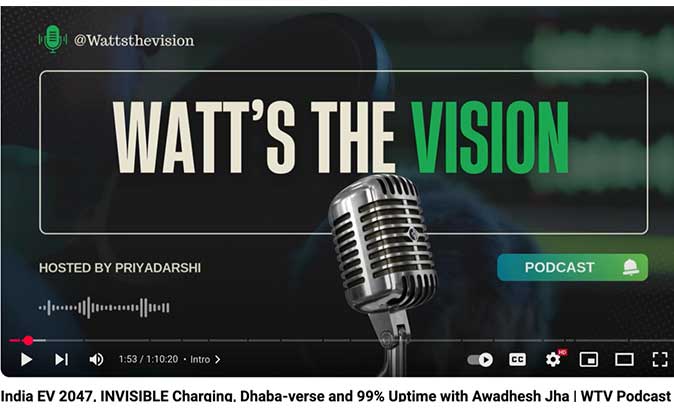
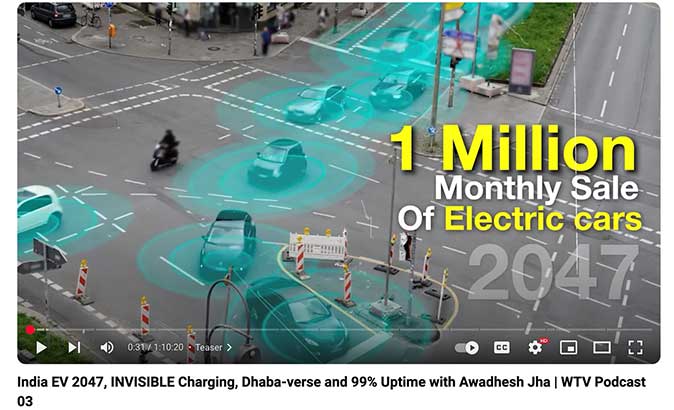
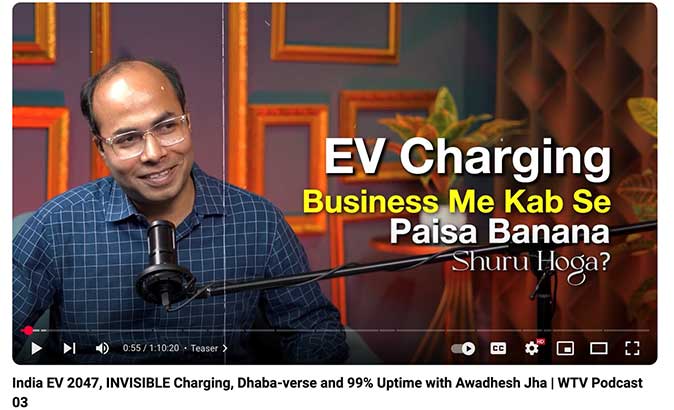
India EV 2047, INVISIBLE Charging, Dhaba-verse and 99% Uptime with Awadhesh Jha | Watts the Vision Podcast

True leaders are visionaries. They see beyond the near future and dare to imagine what others cannot. They are unafraid of walking paths that seem lonely, unconventional, or even eccentric. Where most retreat to avoid judgment, true leaders stand firm in their ideas.
Naysayers and doubts don’t stop them. Instead of clinging to safe, familiar choices for the sake of reputation, they explore the unknown. They welcome bold, untested solutions because they know that real progress is born in the space beyond what is considered “normal” or “traditional.”
For them, incremental improvements and copycat strategies are not enough. They aim to build what changes the world. By painting a picture of what’s possible, they inspire others to dream bigger, imagine freely, and take action. They know that addressing doubts and breaking false beliefs is just as important as building technology itself.
Above all, they understand that mindset is as critical as strategy. They work on the inner shift as much as the outer execution—a principle that defines Awadhesh Kumar Jha‘s journey and explains his extraordinary impact on the clean energy industry, EV promoters, and student communities. His enthusiasm and positive energy—expressed through visionary language, persuasive emotional appeal, and powerful storytelling—position him as a charismatic influencer and respected thought leader in the industry.
He brings practical, solutions-focused leadership to the electric mobility space. With experience across both the public and private sectors, he understands the importance of accountability, innovation, and delivering results. He has worked on transformative projects and led teams that achieved several of India’s first milestones. A strong advocate for sustainability, he envisions a planet that works not just for us today, but for future generations—built on safe communities, reliable transport, and sustainable growth.
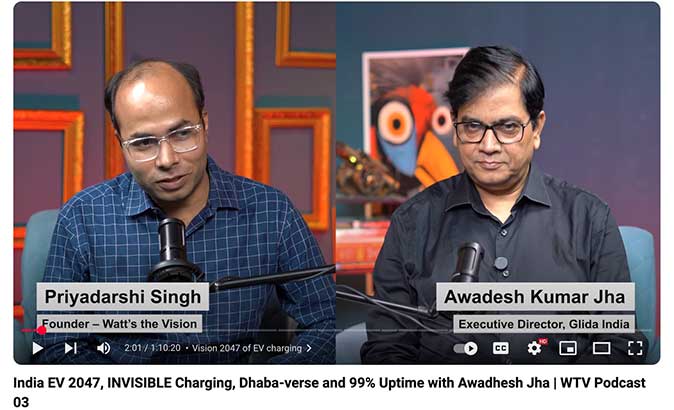
And that is exactly what we explore in the latest episode of Podcast – Watts the Vision, presented by Priyadarshi Singh.

Podcast image 1

What’s inside this episode?

Awadhesh Kumar Jha, Executive Director of GLIDA (formerly Fortum Charge & Drive India), takes us on a tour of India’s EV future—from invisible wireless charging to highway “Dhaba-Verse” hubs—while showing why reliability matters more than raw charger counts.

You’ll learn about:

  • Invisible charging: wireless pads, static and on-the-move—no QR codes, no cables.
  • VIN = Wallet: seamless app-free payments, like UPI but for vehicles.
  • Dhaba-Verse hubs: solar canopies, clean restrooms, co-working pods along highways.
  • National EV Charging Code: India’s “TRAI moment” for open standards and policy unity.
  • Grid myth vs. math: why EVs don’t “crash” the grid—local peak mismanagement does.
  • Reliability over numbers: uptime and kWh delivered matter more than “no. of chargers.”
  • Pricing truth: tariffs ≠ petrol pricing; why idle fees after 80% SOC are needed.
  • Make-in-India with quality: practical design details like cable weight, connector height, and cable management.

Podcast image 2

Why this episode is special:

  • It’s new – wireless charging pods, VIN-wallet, Dhaba-Verse.
  • It’s useful – myths busted with real numbers you can quote.
  • It’s spicy – free curbside charging in India? Think again.
  • It’s hopeful – a credible roadmap to convenient, reliable charging.


Podcast image 3

About the Host – Priyadarshi Singh

A seasoned clean-mobility strategist and storyteller, Priyadarshi has spent 14 years turning big climate goals into on-the-ground wins. From drafting Delhi’s pioneering EV Policy to scaling bus electrification and advising ministries on net-zero roadmaps, he has worked across government, startups, and global think tanks. An alumnus of IIM Ahmedabad, he brings sharp questions, real-world numbers, and everyday humour to every episode—always chasing ideas that move both people and the planet forward.

About Watt’s the Vision

Watt’s the Vision isn’t just a podcast—it’s India’s time machine into 2047. Each episode drops you into the future with bold, cinematic “India 2047” scenes, myth-busting debates, and contrarian takes from India’s top visionaries—not guests. It’s not a long talk—it’s a movement of ideas shaping India’s ride to net zero. Subscribe to the channel here
To read GLIDA‘s story, click here.

Why Trust Drives Everything We Do at GLIDA

At GLIDA, Trust Is Everything

For us at GLIDA, trust isn’t just a word—it’s the heart of everything we do. In a fast-evolving world of electric vehicles, where charging infrastructure is still growing, we believe trust is what sets us apart. It’s our strength, our strategy, and our promise to every EV user.
We know this is a time of transition. The EV community is expanding, and the charging network is still catching up. That’s why we’re focused on building trust—step by step—by showing up with expertise, consistency, and care. We want to be known not just as a Charge Point Operator, but as the most trusted one.
Since day one, our goal has been simple: help people believe in electric mobility. We’ve worked with patience and courage to build confidence in the EV journey. And now, we’re proud to say: the time for electric mobility isn’t coming—it’s already here.

Our Story, Told Through A Film

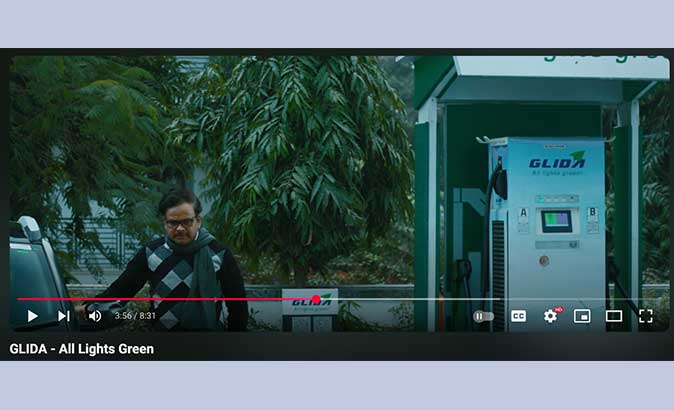
Taken this video from LinkedIn
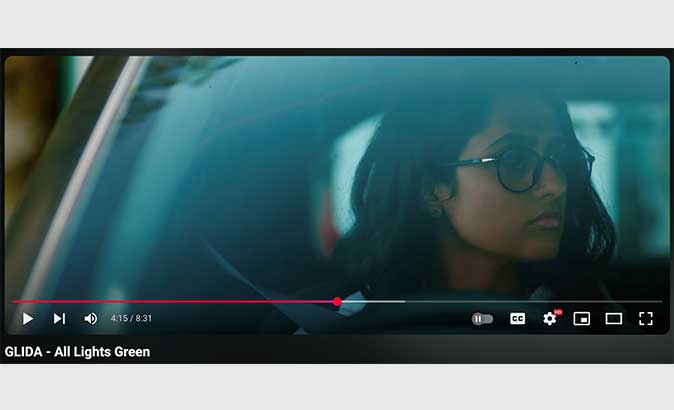
GLIDA brand film

We’ve created a brand film that shares our journey. It’s honest, real, and built on the values that matter most—trust, authenticity, and credibility. We hope it connects with you, just like our work has connected with so many EV enthusiasts across India.
Back in 2017, GLIDA was one of the early believers in the EV space. We ran awareness campaigns, supported policy makers with our Nordic experience, and brought people together through EV rallies to build stronger EV Communities. Our leadership focused on challenging assumptions and sharpening strategies in real time by staying close to EV users and hearing their voices.
We didn’t win people over with flashy ads—we connected with them. It was never about selling; it was about aligning. By going back to the basics—knowing our audience, speaking their language, and making them feel genuinely seen—we found the real win. Good old-fashioned empathy still works wonders. It has been magical for us—our secret ingredient!

Leadership That Leads with Integrity

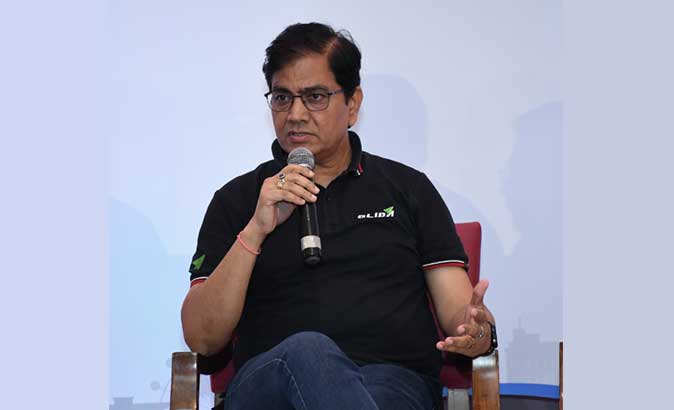
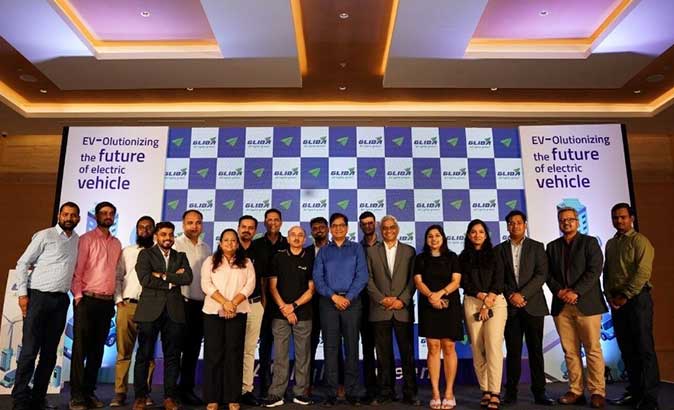
Taken this photo from LinkedIn
Leadership Photo
Our Executive Director, Mr. Awadhesh Kumar Jha, is a respected voice in the EV world. He’s known for his knowledge, charisma, positive energy, clarity of thought, and powerful presence on stage. As he says:
“Brands that earn trust today will lead tomorrow. Trust isn’t a byproduct—it’s a growth strategy.”
That’s exactly how we operate. We focus on what works, stay true to our values, inspire thought leadership, and keep improving every day.

We’re Not Chasing Hype—We’re Building Impact

Yes, we are a growth company, and our progress has been strong thanks to our passionate team. But we’re not here to be the biggest or the loudest. We just want to be better than we were yesterday. If we can help more people switch to EVs with confidence, and build a charging network that truly connects India, that’s success for us.
Through trust, we have won every deal, achieved every milestone, and earned every long-term relationship.
Because we believe charging isn’t just a service—it’s an experience. And it should feel easy, empowering, and trustworthy.

Let’s Build This Together

GLIDA’s journey is powered by people like you—smart, responsible users who care about the future. That’s why we’d love your help.
A heartfelt thank you to our incredible team, business leaders, customers, board members, industry peers, and stakeholders. Your insights have challenged us, inspired us, and helped us think bigger.
Together, we’re writing the next chapter of GLIDA—one built on bold ideas, a strong performance culture, and a shared purpose to deliver truly differentiated solutions for our customers.
GLIDA has come a long way, and we’re standing at a once-in-a-generation moment—a chance to reshape our industry, improve lives, and make a real impact on the planet.
Tell us where you think a GLIDA Charging Station would make a difference. Suggest cities, neighborhoods, or public places where we can serve better.

Step by Step, We’re Charging Forward

We invite you to watch our brand film. It’s a reflection of our journey, our values, and our belief in the power of trust.
CLICK HERE

GLIDA Video Thumbnail

We’d Love to Hear from You

If it resonated with you, inspired you, or sparked any thoughts—we’d love to hear your feedback. Your voice helps us grow, improve, and stay connected to what truly matters. Every response inspires us to build a better, more trusted EV future—together.

Team GLIDA
Team GLIDA

How Can India Follow Europe’s Lead in EV Emission Regulations?

India is at a turning point. The world is watching us — not just as a land of history, culture, and innovation, but as a nation poised to lead the clean mobility revolution. And today, there is no doubt: this is India’s time.

We are building not just an economy, but an ecosystem — one that is robust, resilient, and responsible. We are shaping industries that will serve 1.4 billion citizens while steering the country toward its sustainability goals on a cleaner, greener path. At the heart of this transformation lies one of our boldest bets — the Electric Vehicle (EV) revolution.

But here’s the question: What lessons can we draw from the world? True wisdom is not about reinventing the wheel; it is about learning what worked, what didn’t, and tailoring those lessons to India’s unique journey.

Delhi at the Heart of India’s EV Transition

Delhi today stands as a beacon in India’s clean mobility journey. Transport contributes nearly 14% of the country’s greenhouse gas emissions, making EV adoption not just an environmental necessity but also a strategic economic opportunity.

The city has made remarkable progress: 18% of new vehicle registrations are already electric, thanks to progressive policies and early adoption momentum. Yet, challenges remain — limited charging infrastructure, high upfront costs, financing gaps, and supply chain constraints all stand in the way of large-scale adoption.

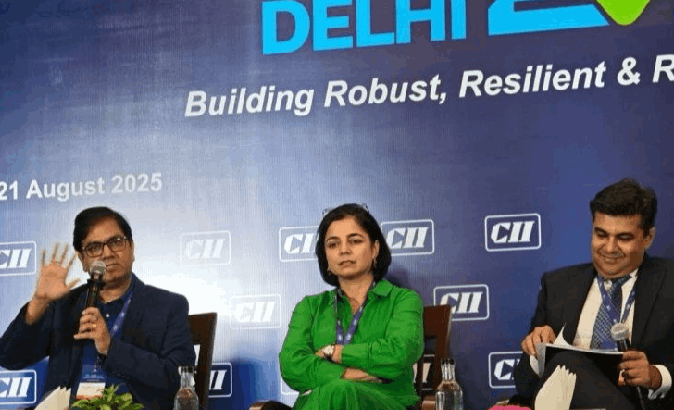
To address these challenges and accelerate solutions, the 3rd CII Delhi EV Summit 2025 was held on 21st August in New Delhi. It brought together policymakers, industry leaders, startups, technology innovators, investors, and sustainability experts — all with one shared mission: to drive India’s EV revolution forward through innovation, collaboration, and resilience.

Key Themes & Insights

The summit’s discussions were diverse and insightful, covering areas such as:

– Battery Technology, Swapping, Charging & Grid Integration
– Building EV-ready Cities
– Circular Economy & Battery Recycling
– Green Manufacturing for Long-Term Sustainability

One of the most impactful sessions came from Mr. Awadhesh Kumar Jha, Executive Director at Glida India, a clean energy and sustainability leader with over three decades of experience. Known for his straightforward and bold approach, he challenged conventional thinking and offered a vision for India’s EV future.

His core message was clear: India’s EV adoption cannot succeed by focusing only on private demand and charging rollouts. The real leap lies in accelerating supply-side adoption, especially in commercial fleets — taxis, buses, LCVs, and trucks.

Key Takeaways from Mr. Jha

1. Urgent Action:
“Europe didn’t wait for voluntary adoption. It enforced strict fleet-average CO₂ standards. India needs the same discipline.”
Mr. Jha called for binding emissions regulations, including a dedicated Emissions Regulator under the Environment Ministry to ensure accountability across all vehicle categories.

2. Charging Infrastructure — Demand Before Supply:
Today, India sees two realities — fleet hubs with high utilization, and private chargers that remain idle. Charging infrastructure will only scale sustainably if linked to fleet demand and CAFE obligations.

3. Technology Pathways — Beyond Either/Or:
High-utilization fleets need 100–120 kW fast chargers, while buses and long-haul trucks will require megawatt charging. Policies should regulate emission outcomes, not dictate the technology itself.

4. A Bold Ask for Delhi:
Delhi could become India’s first state with an independent Emissions Regulator — defining fleet-average targets, annual reduction goals, and penalties for non-compliance. The certainty of outcomes would unlock investment, innovation, and credible market participation.

The Road Ahead

With the right regulatory clarity, institutional discipline, and demand-driven infrastructure, India can leapfrog global peers — de-risking financiers, driving OEM innovation, and emerging as a hub for affordable commercial EVs for the Global South.

The CII Northern Region Delhi EV Summit 2025 was more than a gathering of stakeholders — it was a #CallToAction. The path to a robust, resilient, and responsible EV industry lies not in waiting, but in bold policy, committed leadership, and collaborative execution.

Your turn: Should Delhi lead the way by establishing an independent Emissions Regulator to set fleet-average targets and drive India’s EV revolution forward? Share your views in the comments section.

Thank you for reading — stay tuned for more insights and updates on India’s clean mobility transformation.

To explore how Glida India is leading this transition, read: From Early-Mover to Market Leader: How This EV Charging Venture Is Reducing Air Pollution in India with Green Mobility Solutions.

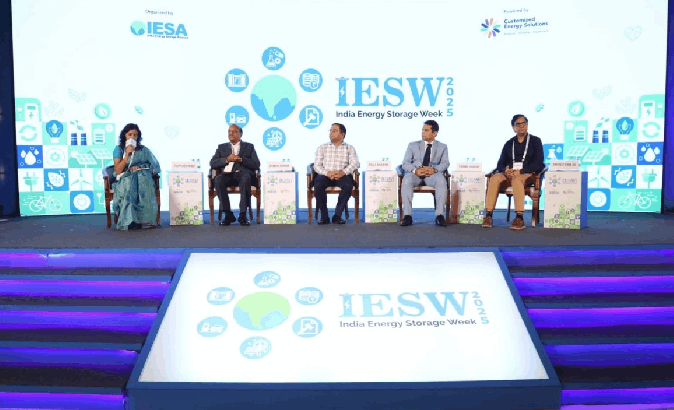
GLIDA at India Energy Storage Week (IESW) 2025, International Conference & Exhibition

The world needs more than policies — it needs purpose-driven action. At GLIDA, we’ve always believed that true transformation comes not just from policy, but from the intent and effort behind it. Since our founding in 2017, we’ve been steadfast in our mission to accelerate India’s transition to clean mobility, aligning with the nation’s broader sustainability goals.

As Swami Vivekananda wisely said, “Arise, awake, and stop not till the goal is reached.” That spirit continues to guide our journey.

The Evolution of EV Charging Technology

In a recent address to an esteemed gathering of industry professionals, policymakers, regulators, and energy leaders, Mr. Awadhesh Kumar Jha shared how EV charging technology has evolved over the last 6–7 years. He illustrated this evolution through Glida India’s own growth story — a reflection of how innovation and purpose have gone hand in hand.

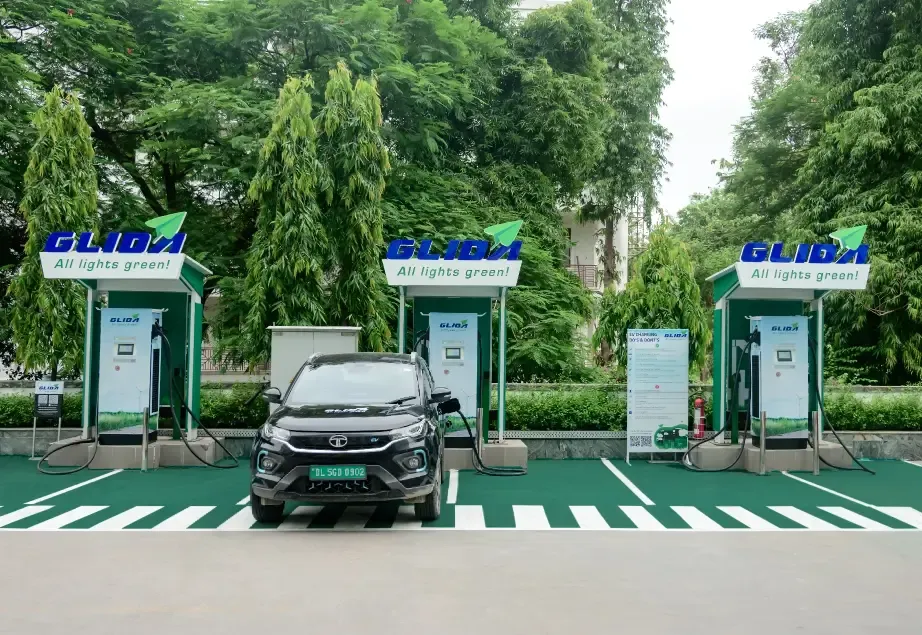
Our Journey: GLIDA began its public charging network in 2018 by deploying a single 20 kW DC001 dual-connector charger to serve the limited EVs available at the time. As technology advanced and EV adoption accelerated, we transitioned to CCS 50 kW single-point chargers and later to 60 kW multi-point systems. These soon expanded into large charging hubs in malls and airports, designed to meet the demands of vehicles with increasing battery capacities.

Recently, as many EVs now come equipped with 80–100 kWh batteries, we’ve deployed 200 kW modular chargers to serve diverse vehicle requirements. For e-buses with even larger batteries — ranging from 200–400 kWh — GLIDA has introduced 300+ kW high-capacity chargers. This evolution represents not just growth, but a firm commitment to enabling the infrastructure India needs for a cleaner, electrified future.

The Road Ahead

Looking ahead, Mr. Jha outlined a bold vision: India is on track to adopt 120 kW and above as the new standard for DC fast charging, with megawatt-scale charging set to be piloted and commercially scaled by 2030. This will redefine convenience and efficiency in the electric mobility space, supporting both personal and commercial EV segments.

Powering a Movement

At GLIDA, we’re not just enabling electric mobility — we’re powering a movement rooted in purpose, progress, and the shared future we’re building together. We’re committed to helping more people choose electric vehicles by building awareness, trust, and accessibility. Through every platform, we share our story with EV enthusiasts and invite others to join the journey toward a sustainable tomorrow.

We believe that now is the time to shape a future that’s strong, flexible, and built to last. Our Executive Director, Mr. Awadhesh Kumar Jha, continues to play a pivotal role by supporting working group dialogues, providing strategic and policy guidance, and offering consulting support. He actively engages with government stakeholders and industry thought leaders to strengthen India’s EV ecosystem.

Collaboration for Progress

Our heartfelt thanks to Team India Energy Storage Alliance (IESA) and India Energy Storage Week (IESW) for organizing a premier international conference and exhibition with strong global participation. The event featured dedicated pavilions and delegations from Australia, Germany, and SARIC, along with robust support from state partners — Gujarat, Odisha, Telangana, and Chhattisgarh.

The conference covered critical areas such as renewable energy, advanced batteries, alternative storage solutions, electric vehicles, charging infrastructure, green hydrogen, battery manufacturing, supply chains, and recycling. Industry leaders came together to share valuable insights and ideas that will define the road ahead for India’s clean energy and mobility transition.

Charge-Thru – A Seamless EV Charging Experience

Ideas, insights, new designs, innovative approaches, and creative breakthroughs are often sparked by a catalyst. More often than not, this catalyst is user feedback — rooted in real pain points and preferences.

At GLIDA, we listened to EV users’ comments and feedback. Many were frustrated with downloading multiple charging apps or carrying RFID cards from different Charge Point Operators.

“I just want to charge my EV. Why do I need to download and register on an app for that?” — a common complaint.

Returning users often forget their login credentials, especially those who avoided saving passwords due to privacy or security concerns. Some had as many as 10 different apps, with 10 forgotten passwords. What should have been a simple, quick charging experience became a point of friction.

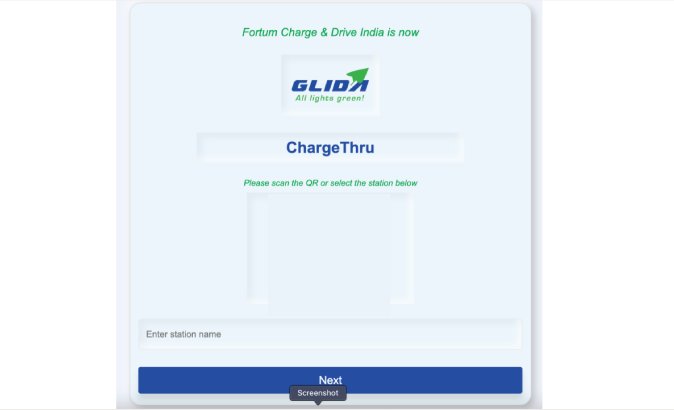
So we built a solution: GLIDA Charge-Thru.

How GLIDA Charge-Thru Works

Find a GLIDA Charger: Locate a GLIDA charging station (formerly Fortum Charge & Drive India) and look for the QR code on the charger.

Scan & Start: Scan the QR code with your phone. A web link opens — no app or RFID needed.

Enter Details: Select your charging duration, enter your email and phone number, and verify via OTP.

Make Payment: Pay securely using UPI, credit/debit card, or net banking. Press Charging to begin.

Relax While Charging: Go about your day while your EV charges.

Key Benefits

• No app download required
• No RFID card needed
• Works on any smartphone
• Instant refunds for unused time
• Perfect for first-time or casual EV users

Watch the demo here

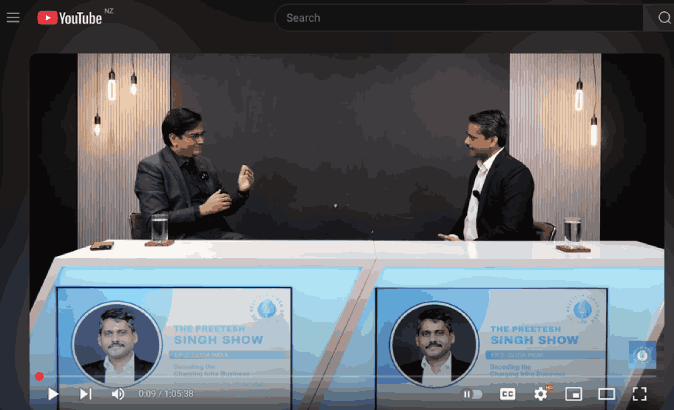
TPSS Ep02: ChargingInfraSeries: Decoding the charging infra business

At GLIDA, we take pride in our journey and embrace the responsibility of building a robust EV ecosystem—one that puts full control in the hands of EV users. We believe this vision can only be realized through genuine cooperation, collaboration, and co-creation among all industry stakeholders—beyond the bounds of competition.

The signs are clear: the EV industry is entering a phase where innovation and growth can thrive side by side. It’s been incredibly rewarding to witness the evolution of India’s EV ecosystem over the past few years. More people are making the shift to electric, supported by a growing variety of EV models across price points and a steadily expanding network of public charging stations in convenient locations. This momentum is promising—but we believe the most valuable lessons for our industry are still ahead.

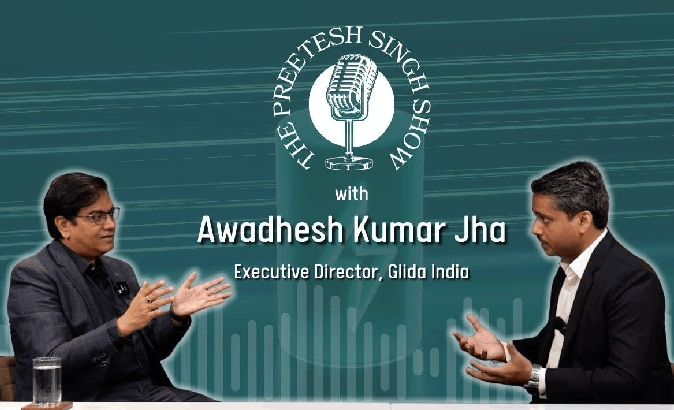
If this resonates with you, we invite you to tune into a compelling conversation between Awadhesh Kumar Jha and Preetesh Singh. It’s not your average panel talk—it’s the kind of dialogue you’d compare to a rare, well-aged wine: rich, nuanced, and led by voices who’ve shaped the industry from within.

We know how often you see claims like “Untold Industry Insights” or “The Most Credible Speakers—Click Now.”
𝗪𝗲 𝐰𝗼𝗻’𝘁 𝗺𝗮𝗸𝗲 𝐚𝐧𝐲 𝐬𝐮𝐜𝐡 𝗰𝗹𝗮𝗶𝗺𝘀 𝐚𝐧𝐝 𝐡𝐮𝐦𝐛𝐥𝐲 𝐢𝐧𝐯𝐢𝐭𝐞 𝐲𝐨𝐮 𝐭𝐨 𝐥𝐢𝐬𝐭𝐞𝗻 𝐭𝐨 𝐭𝐡𝐞𝐢𝐫 𝐏𝐨𝐝𝐜𝐚𝐬𝐭.

This is one of those rare conversations that truly delivers. Expect real insights, surprising anecdotes, and perspectives that haven’t been repeated a hundred times. Don’t click out of curiosity—listen if you’re genuinely invested in understanding India’s EV journey and ready to help shape a cleaner, smarter future with us.

𝗖𝗹𝗶𝗰𝗸 𝘁𝗵𝗲 𝗟𝗶𝗻𝗸 𝗵𝗲𝗿𝗲: Listen to the Podcast

In this episode, the speakers will explore the incredible growth story of electric vehicle (EV) charging infrastructure in India. From the early challenges to the exciting innovations shaping the future, this discussion offers valuable insights for EV enthusiasts, industry professionals, and anyone curious about the EV ecosystem.

blog image

The Preetesh Singh Show (TPSS)

Topics Covered:

– Policy Landscape: How regulations are shaping the EV charging industry.
– Competition & Stakeholder Contributions: Key players and their impact on growth.
– User Experience & Technology: Innovations improving accessibility and efficiency.
– Investment Trends: Funding patterns and the evolving business landscape.
– Second-Hand EV Market: Its surprising role in enabling the charging infrastructure.
– Future Needs: What India needs to scale up EV adoption sustainably.

Join the conversation to uncover key trends, challenges, and opportunities in building a robust and sustainable EV charging network.

Don’t forget to like, comment, and follow Glida India LinkedIn Page to stay updated on our latest company updates!

Subscribe the Channel here: YouTube – Preetesh Singh

close icon
Your current location is Gurugram
close icon

BENEFITS

INVESTMENT DETAILS
close icon

Contact Us

phone
+91 124 4418800
  • Fortum Charge & Drive India Pvt Ltd

    The Oberoi Centre, Building No. 11, Level 6, DLF Cyber City Complex, Phase 2, Gurgaon 122002, Haryana, India

  • phone
    1800 120 3578
  • phone
    support@chargedrive.in