As I was about to pen down my thoughts on how India can adopt Electric Vehicle not only to meet its INDC under Paris Agreement but to also offer acceptable and affordable transport means to its citizen, NITI Aayog has proposed a comprehensive Electric Vehicle Policy to Government for its approval. Introduction of “Feebate – levying a fee on ICE vehicles and rebate on Electric Vehicle”, exemption from road tax and registration charges, levying 12% GST on battery and other electronic component, and providing a subsidy of INR 6000 (US $90) per kWh on battery pack will galvanize the EV industry undoubtedly. But the moot question is “is it adequate enough to make EV acceptable by end consumers”. To address this question, we need to understand where we stand in terms of the state of the economy and what are the challenges the EV sector faces.
State of Economy in India
Fast faced expansion of the Indian economy has enhanced living standards and increased the purchasing power of its people. India is the fastest growing G20 economy in the world, recording a GDP growth of 7.1% in 2016 with a forecast of 7.4% in 2018. No country above USD 1 Trillion GDP is expected to grow as fast as India in the next 5-6 years.
Favorable demographic dividend, increasing urbanization and rising incomes levels and consumption will be the key drivers for the spectacular growth of the Indian economy over the next few years. India’s population between the age of 15 and 64 is slated to rise from 860 million in 2015 to about 1 billion over the next 20 years, i.e. its labor force will rise by about 30%, making it bigger than that of China. One third of its population currently lives in urban areas which is much lower than the urbanization levels in countries such as China (57%) and United States (82%). A higher urban population is correlated to an increase in middle class consumption besides contributing to improving the well-being in terms of literacy rate, infant mortality rate and poverty rate. By 2030, India (23%) is expected to beat US (7%) and China (18%) to account for the biggest source of middle-class consumption demand in the world.
Also Read: In what ways the EV infrastructure is changing in India
Automotive Industry in India
Two decades of robust growth have propelled India from being a net importer of automobiles to a leading manufacturer and exporter of vehicles and components. By volume, India is the fifth largest vehicle manufacture in the world. It is the largest manufacturer of two-wheelers, three-wheelers and tractors, fourth largest in manufacture of light commercial vehicles and fifth largest in manufacture of heavy commercial vehicles. It is estimated that by 2020 the automobile industry in India will be the third largest in the World after China and USA.
The domestic demand for automobiles is expected to remain strong as only 20.3 out of every 1,000 Indians own a car, being among the world’s lowest rates. Compared to this, developed countries like USA, Europe, China, Norway, Japan have number of cars per 1000 person is in the range of 200-800 and more. Another interesting fact suggests that percentage of household owning “No Car” or “One Car” is fast declining and “Two Cars” or “Three Cars” are increasing.
While numbers highlight impending opportunities in the sector, there are several challenges fueled by carbon emissions. According to World Health Organization Report, out of the 20 most polluted cities in the world, 14 are in India. Not surprisingly, vehicular pollution is one of the major contributors to the deteriorating air quality in the country. In this background, adoption of electric vehicles (EV) have emerged as the most viable option to help curb the emissions from transport sector.
Challenges for acceptability of Electric Vehicle
Like other countries, India has embarked on a journey towards the electrification of automobiles. Scheme and Plans like National Electric Mobility Mission Plan (NEMMP) 2020, and Faster Adoption and Manufacturing of (Hybrid and) Electric Vehicles (FAME), have provided the initial framework for adoption of EV in the country. But this has not proved enough.
E-mobility has three stakeholders – OEMs, Charging Infrastructure providers, and Consumers. Amongst all, it is the consumer who is the ultimate driver. So, the question of whether EV is acceptable to consumers is to be looked at from Consumer perspective.
According to McKinsey’s 2016 EV consumer survey of buyers considering battery-powered EV in China, Germany, and the United States, consumers rank not having enough access to efficient charging stations as the third most serious barrier to EV purchase, behind price and driving range. With EV prices declining and ranges expanding, charging is expected to be the top barrier.
Considering the fact that in India EVs will remain confined to urban areas initially, adoption to such extent would require a ubiquitous network of public charger as in urban areas in India, private garages are not very prevalent. No doubt there would be workspace charger, but that would be a complimentary to Public Charging than otherwise.
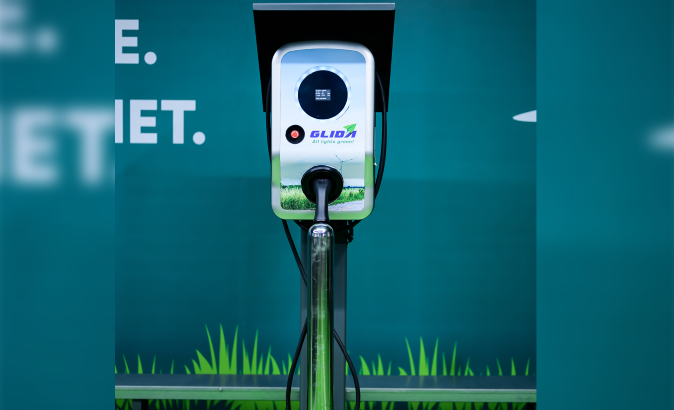
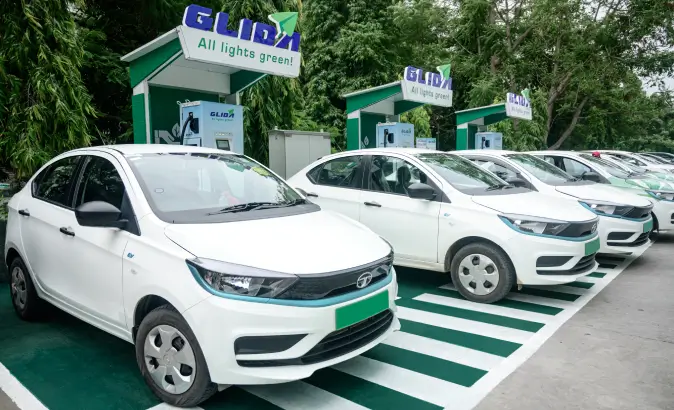
For EV to be acceptable, consumers have to be assured of availability of charging stations like fuel stations for ICE vehicles. If adequate and appropriate charging points are available within cities as well as along highways, it would alleviate the range concerns of vehicle users. Currently, the foremost concern of the driver of this vehicle is what they would do if they were stuck in a jam and the battery is low. A robust charging station network would give them confidence and that would work as pull effect for OEMs.
Another push towards electric mobility shall be largely driven by personal choice of consumer. Indian consumers currently have practically no choice of electric vehicles to choose from whereas a consumer in US and China have more than 50 and 100 variants respectively. Indian OEMs shall have to come out with many more variants to offer a bouquet of choice to consumer. However, mere choice of vehicle will not attract a consumer to switch to EV unless they find the cost pocket friendly. Even though on Total Cost of Ownership (TCO) an EV is better than equivalent ICE vehicle for certain travel range on daily basis, most of privately owned vehicles will not fit into this bill as their total travel is less than 50km a day. With expected battery cost reduction to less than US $ 100 by 2025 as per one report, EV will become at par or less than ICE vehicle by 2025. Thereafter, there will not be any stoppage to adoption of EV as there will not be any incentive to drive ICE vehicles as operational and maintenance cost of EV will be much owner than that of ICE vehicles. Hence, what is required is facilitation for next 6-7 years to reduce the upfront cost of electric vehicles.
Also Read: How Fast Charging Networks are Transforming India/p>
Solution to address the challenges
The proposed policy of NITI Aayog as referred above is intended to address the cost of EV. With road tax, registration charges exemption coupled with one time rebate and reduction in battery cost by almost 40% through subsidy, EV is expected to become affordable.
Developing large scale charge point network in Indian urban environment will be more challenging. High upfront capital costs and present low levels of uptake for electric vehicles mean that returns on investment will only be realized over longer periods. That would require for government to create opportunities for investment in new rapid charging infrastructure by reducing key barriers to investment, in particular access to suitable sites with sufficient power.
Government support would be required in addressing above issues by not only making location available for this purpose if we have to roll out a good network of charging stations but also undertake electricity grid upgrades, wherever needed. To begin with, all parking places must have minimum 20% of parking earmarked for Charging station. These locations could be used for DC fast charging. The earmarked parking spaces should be given free of cost to potential charging service provider initially for couple of years. Government can secure sites, and provide upgraded electricity grid infrastructure to Charge Point Operators for setting up charge points.
The current situation illustrates the fact that the shift to electric vehicles in India will take time. People are analyzing the benefits of electric vehicles and the cost involved in its purchase and maintenance. One way for EVs to become a ‘buyer’s choice’ is to create an environment wherein all the parties involved including the buyers take cognizance of the importance of zero emission and its impact on improving the quality of air. While recent changes in policies are a good sign for EV adoption in the country, we need faster and consistent policy frameworks to achieve the EV30@30 mission. Though the road ahead is riddled with challenges, focused solutions won’t make it an impossible to drive to a safe and clean future.