GLIDA Lounge
-
06-Oct-25
-
 Back
Back
The Real Indian EV Story: Beyond Cars and Chargers
India’s electric vehicle (EV) transition is one of the most dynamic in the world, but it is also one of the most misunderstood. Narratives often equate “EV = car,” drawing parallels with Europe or OECD countries where passenger cars dominate the electrification story. This framing obscures India’s unique reality — one defined by four distinct mobility ecosystems: two-wheelers (2W), three-wheelers (3W), cars (4W), and buses/trucks. Each segment has its own economics, policy drivers, and adoption curve. If we continue to view the Indian EV journey through a car-centric lens, we risk missing both the successes already achieved and the challenges that truly need attention.
Segment-wise Reality Check
1. Two-wheelers (2W): Electric scooters and bikes have become the vanguard of India’s EV revolution. With demand subsidies under FAME-II and the newer PM e-DRIVE, sales have surged to more than 1.1 million units in FY 2024–25. Adoption is now around 5% of total 2W sales, and the segment is moving toward cost parity with ICE. Home charging and swappable batteries make public charging infrastructure less critical here.
2. Three-wheelers (3W): This is India’s quiet success story. More than 700,000 e-rickshaws and e-autos were sold in FY 2024–25, taking EV penetration beyond 50% of total 3W sales. Policy incentives, lower total cost of ownership (TCO), and financing models have made this segment self-sustaining.
3. Buses and Trucks: Electric buses, supported by FAME-II and state procurement programs, are scaling up across cities. Trucks are beginning to receive policy focus under PM e-Drive, recognizing freight electrification as essential for decarbonization. Here, depot charging and highway charging corridors are critical.
4. Cars (4W): The most striking story is in passenger cars. Unlike 2W and 3W, private electric cars have not received meaningful demand subsidies. Under FAME-II, only a small quota (~35,000 units) for fleet/commercial cars was supported, which has since been withdrawn. And yet, consumer adoption is rising sharply. By May 2025, EVs crossed 4% of passenger car sales, and in July/August 2025, that number exceeded 5%. This is happening without direct fiscal support, driven instead by consumer demand, improving model variety, and modest OEM push.
This makes the car story both a policy gap and a consumer-driven triumph.
The Charging Infrastructure Narrative
Another recurring distortion in media reporting is around charging infrastructure. It is often argued that “India doesn’t have enough chargers,” with EV growth compared unfavorably to “cars per charger” benchmarks in Europe or China.
By one estimate, India today has ~25,000 public charging points for ~300,000 compatible electric cars — a ratio of roughly 1:12. On paper, this looks healthy compared to global averages. But here’s the nuance:
• A charger-to-car ratio does not guarantee utilization for CPOs to track as a KPI.
• With cars coming equipped with larger batteries and faster charging capability, a smaller number of high-capacity chargers can serve many more vehicles effectively.
• The real metrics that matter are location, speed, uptime, and capacity utilization — not just raw numbers of charging points.
For 2W and 3W, which charge largely at home or depots, public charging is less relevant. For buses and trucks, strategic corridor planning matters more than urban density. For cars, destination and highway chargers matter, but adoption is already happening without waiting for a perfect charging map.
Why Segmenting the Narrative Matters
When we conflate all EVs into a single story — “India is lagging because chargers are too few” — we commit three errors:
1. We underplay successes: 2W and 3W adoption is world-leading.
2. We miss policy choices: The government consciously avoided subsidizing private cars to prevent optics of benefiting the affluent, yet car adoption is growing regardless.
3. We misdirect debates: Instead of asking how to design targeted support for private cars or high-capacity freight chargers, we end up in circular arguments about charger counts.
A segmented narrative forces us to ask sharper questions:
• How do we finance the next million e-2Ws and e-3Ws sustainably?
• What is the right mix of depot vs corridor charging for buses and trucks?
• Should India consider limited incentives for private EV cars to accelerate adoption while ensuring equity?
• How do we measure charging adequacy beyond raw ratios?
Conclusion: Towards a Smarter EV Story
India’s EV transition is not one story but four. Each segment has its own momentum, challenges, and infrastructure needs. Recognizing this is essential for policymakers, investors, OEMs, and consumers.
Most importantly, the car segment’s rise beyond 5% share without fiscal support should be celebrated as evidence of strong consumer demand and market maturity. This is happening in parallel with 2W/3W mass adoption, bus electrification, and early truck pilots.
If the narrative continues to frame the Indian EV journey through a “car-only” or “charger-count” lens, the risk is that policy and public opinion will be skewed. The better path is a nuanced, segmented, and data-driven conversation — one that captures the diversity of India’s mobility landscape.
Only then can we design the right programs, deploy the right infrastructure, and communicate the right messages to consumers.
Authored by
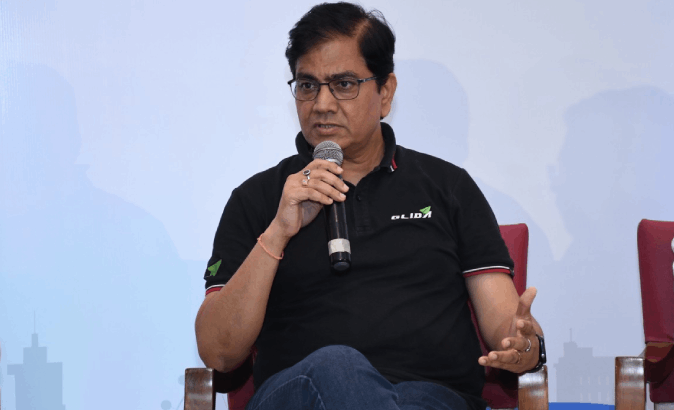
Article by Awadhesh Kumar Jha, Executive Director – GLIDA.
To read GLIDA’s story, click here.
Mentions and industry contributors: Indian Charge Point Operators Association, Glida India