GLIDA Lounge
-
24-Aug-25
-
 Back
Back
How Can India Follow Europe’s Lead in EV Emission Regulations?
India is at a turning point. The world is watching us — not just as a land of history, culture, and innovation, but as a nation poised to lead the clean mobility revolution. And today, there is no doubt: this is India’s time.
We are building not just an economy, but an ecosystem — one that is robust, resilient, and responsible. We are shaping industries that will serve 1.4 billion citizens while steering the country toward its sustainability goals on a cleaner, greener path. At the heart of this transformation lies one of our boldest bets — the Electric Vehicle (EV) revolution.
But here’s the question: What lessons can we draw from the world? True wisdom is not about reinventing the wheel; it is about learning what worked, what didn’t, and tailoring those lessons to India’s unique journey.
Delhi at the Heart of India’s EV Transition
Delhi today stands as a beacon in India’s clean mobility journey. Transport contributes nearly 14% of the country’s greenhouse gas emissions, making EV adoption not just an environmental necessity but also a strategic economic opportunity.
The city has made remarkable progress: 18% of new vehicle registrations are already electric, thanks to progressive policies and early adoption momentum. Yet, challenges remain — limited charging infrastructure, high upfront costs, financing gaps, and supply chain constraints all stand in the way of large-scale adoption.
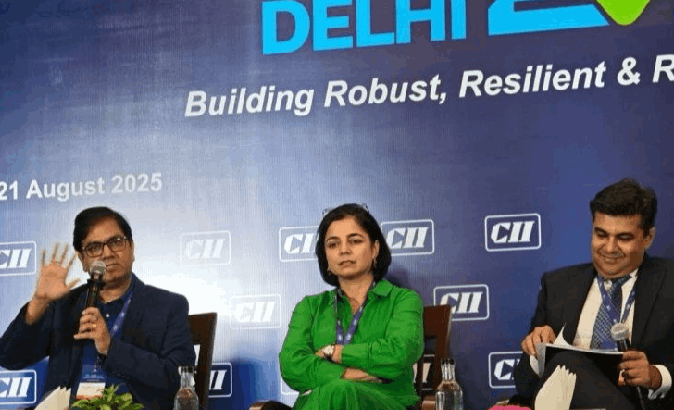
To address these challenges and accelerate solutions, the 3rd CII Delhi EV Summit 2025 was held on 21st August in New Delhi. It brought together policymakers, industry leaders, startups, technology innovators, investors, and sustainability experts — all with one shared mission: to drive India’s EV revolution forward through innovation, collaboration, and resilience.
Key Themes & Insights
The summit’s discussions were diverse and insightful, covering areas such as:
– Battery Technology, Swapping, Charging & Grid Integration
– Building EV-ready Cities
– Circular Economy & Battery Recycling
– Green Manufacturing for Long-Term Sustainability
One of the most impactful sessions came from Mr. Awadhesh Kumar Jha, Executive Director at Glida India, a clean energy and sustainability leader with over three decades of experience. Known for his straightforward and bold approach, he challenged conventional thinking and offered a vision for India’s EV future.
His core message was clear: India’s EV adoption cannot succeed by focusing only on private demand and charging rollouts. The real leap lies in accelerating supply-side adoption, especially in commercial fleets — taxis, buses, LCVs, and trucks.
Key Takeaways from Mr. Jha
1. Urgent Action:
“Europe didn’t wait for voluntary adoption. It enforced strict fleet-average CO₂ standards. India needs the same discipline.”
Mr. Jha called for binding emissions regulations, including a dedicated Emissions Regulator under the Environment Ministry to ensure accountability across all vehicle categories.
2. Charging Infrastructure — Demand Before Supply:
Today, India sees two realities — fleet hubs with high utilization, and private chargers that remain idle. Charging infrastructure will only scale sustainably if linked to fleet demand and CAFE obligations.
3. Technology Pathways — Beyond Either/Or:
High-utilization fleets need 100–120 kW fast chargers, while buses and long-haul trucks will require megawatt charging. Policies should regulate emission outcomes, not dictate the technology itself.
4. A Bold Ask for Delhi:
Delhi could become India’s first state with an independent Emissions Regulator — defining fleet-average targets, annual reduction goals, and penalties for non-compliance. The certainty of outcomes would unlock investment, innovation, and credible market participation.
The Road Ahead
With the right regulatory clarity, institutional discipline, and demand-driven infrastructure, India can leapfrog global peers — de-risking financiers, driving OEM innovation, and emerging as a hub for affordable commercial EVs for the Global South.
The CII Northern Region Delhi EV Summit 2025 was more than a gathering of stakeholders — it was a #CallToAction. The path to a robust, resilient, and responsible EV industry lies not in waiting, but in bold policy, committed leadership, and collaborative execution.
Your turn: Should Delhi lead the way by establishing an independent Emissions Regulator to set fleet-average targets and drive India’s EV revolution forward? Share your views in the comments section.
Thank you for reading — stay tuned for more insights and updates on India’s clean mobility transformation.
To explore how Glida India is leading this transition, read: From Early-Mover to Market Leader: How This EV Charging Venture Is Reducing Air Pollution in India with Green Mobility Solutions.