GLIDA Lounge
-
30-Jan-23
-
 Back
Back
Future of Mobility: India’s Journey towards Net Zero
True Leaders Hold a Superpower
It’s fascinating how their thoughts can impact our emotions and actions. Their persona has the power to move people forward, take a leap of faith, and do things they never thought possible.
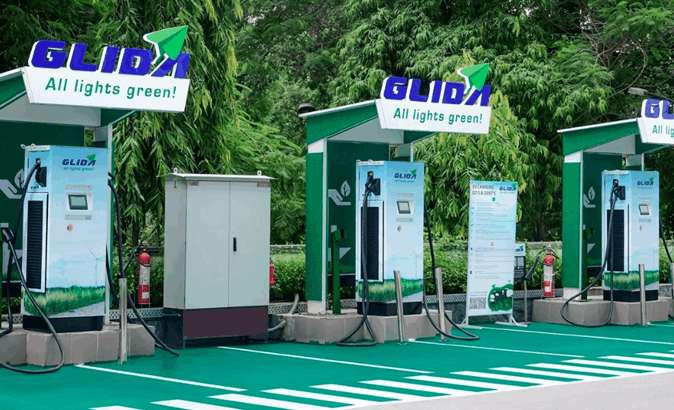
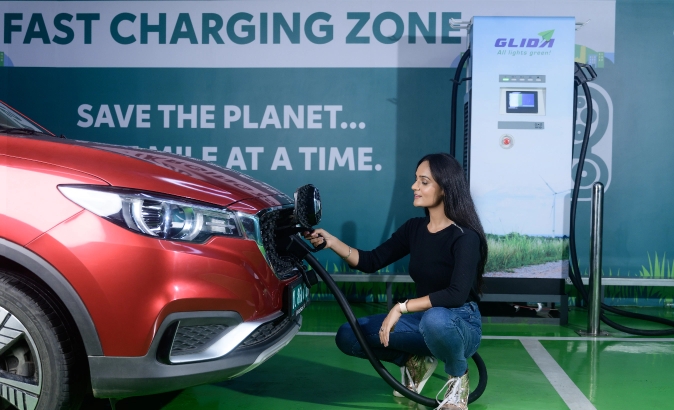
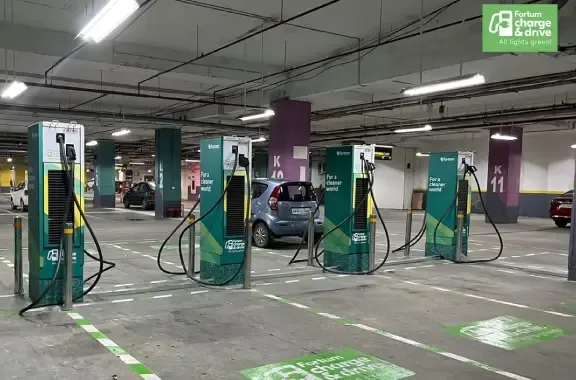
At Glida India, we have always given due importance to disseminating our #Nordic experience and knowledge earned from operating 6000+ charging points.
With #thoughtleadership, we have also shown great courage to speak openly about the hurdles and obstacles that need to be addressed by various stakeholders of the #eMobility industry in the most collaborative way to advance the sector in favor of a cleaner world.
Insights from the Future of Mobility Conference
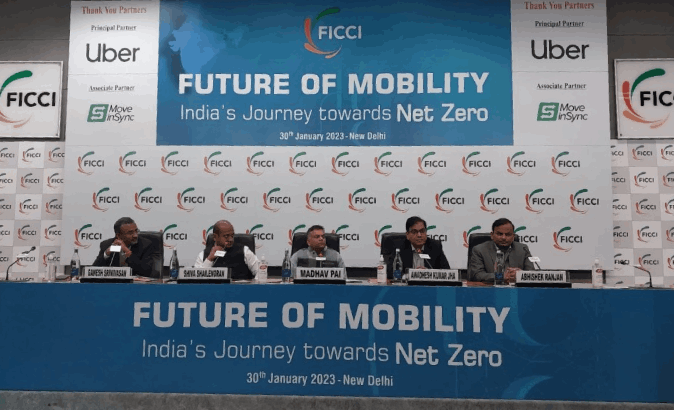
Today, Awadhesh Kumar Jha shared his thoughts at the #FutureofMobility Conference, which provided a platform for industry leaders to discuss key topics like shared and connected transportation technology, seamless mobility services, #sustainablemobility, #autonomous transportation design, #IoT, multi-modal transit solutions, first and last mile connectivity, safe and #InclusiveMobility solutions, the role of mobility in #NetZero commitment, investing and financing models for advancing #eMobility, #PolicyInterventions for sustainable transport ecosystems, rural mobility, #WomenSafety, the need for robust public #EVChargingInfrastructure, and the role of EVs in offering flexibility to the grid through #V2G systems, R&D in bi-directional charging, and profitable business models for #Fleet operators.
Here are the views put forth by Awadhesh Kumar Jha during the panel discussion on #SustainableMobility. We hope they will make an interesting read for you as his perspective involved all aspects:
– The Problem
– Promising Solution
– Proof and Evidence
– Transformative Results
– Summary and Next Steps
The Current Scenario
As per GIZ’s report on EV charging infrastructure and its integration with the electricity grid, India’s road transport contributes nearly 64% of the country’s overall goods movement and caters to around 90% of India’s passenger traffic.
The road transport sector also accounts for close to 23% of emissions. Combined with power generation, these two sectors contribute to almost 45% of the nation’s emissions. Hence, it is vital to address emissions from both these areas.
Electric vehicles hold great promise in aiding and accelerating the decarbonization of both sectors.
India’s Commitments and Opportunities
India has made a commitment at COP26 in Glasgow that 500 GW of generation capacity would come from non-fossil fuels and 50% of energy requirements from renewable sources. Solar and wind will form the bulk of renewable energy sources, but as they are intermittent, a balancing mechanism is required — and that’s where EVs, particularly in the passenger car segment, become crucial.
With 30% annual EV sales expected by 2030, it’s estimated that around 5 million plug-in electric vehicles (PEVs) will be on the road. With an average battery size of 30 kWh, this fleet would have a combined storage capacity of about 150 GWh — essential for integrating variable renewable energy into the grid without additional system investment.
This integration can be achieved by developing and implementing the #V2G (Vehicle-to-Grid) system at both the regulatory and ecosystem levels. We need bi-directional chargers, V2G-enabled vehicles, and a smart grid. This will be a win-win for all stakeholders as it reduces EV ownership costs, lowers electricity infrastructure costs, and eliminates the need for expensive stationary storage. The communication standard IEC15118 already provides a technical foundation for this advancement.
Pilot Projects and Business Potential
Several pilot projects are already underway, and it’s time we implement similar initiatives in India. Fleet owners can benefit significantly — for example, a fleet of 50 cars with 10 kW bi-directional chargers could earn up to INR 5 million annually by supplying power to the grid for six hours a day (10x6x30x5x12x50 = ₹5,400,000).
Get in Touch
If you have any queries or would like to know more, please write to us at support@chargedrive.in or call us at 1800 120 3578.
We’ve taken it upon ourselves to smoothen India’s transition towards electric mobility and pave the way for a cleaner world.
Acknowledgment
Special thanks to FICCI for organizing such an insightful session that influenced and facilitated policy change by creating a platform for industry voices and perspectives.
We also extend our gratitude to the session chairs, moderators, and distinguished speakers who enlightened the audience and set the tone for an inclusive and forward-looking industry dialogue: Subhrakant Panda, Mike Orgill, JVS Ramakrishna, Palash Roy Chowdhury, Dr. Reji Mathai, Gunjan Vakharia, MBA, MS, Deepesh Agarwal, Nishant Arya, Sudhendu J. Sinha, Madhav Pai, Shiva Shailendran Sekar, Ramkrishna Singh, and Abhishek Ranjan.